 English
 Bahasa Indonesia
 Bahasa Melayu
 Cebuano
 Dansk
Dansk Deutsch
 Español
 Français
 Italiano
 Nederlands
 Română
 Tiếng Việt
 Türkçe
 Czech
Czech Ślōnskŏ gŏdka
 Татар теле
 Ukrainian
 العربية
 Thai
Thai Portugues
 Hindi
Hindi Greek
Greek Chinese
 Japanese
 Magyar
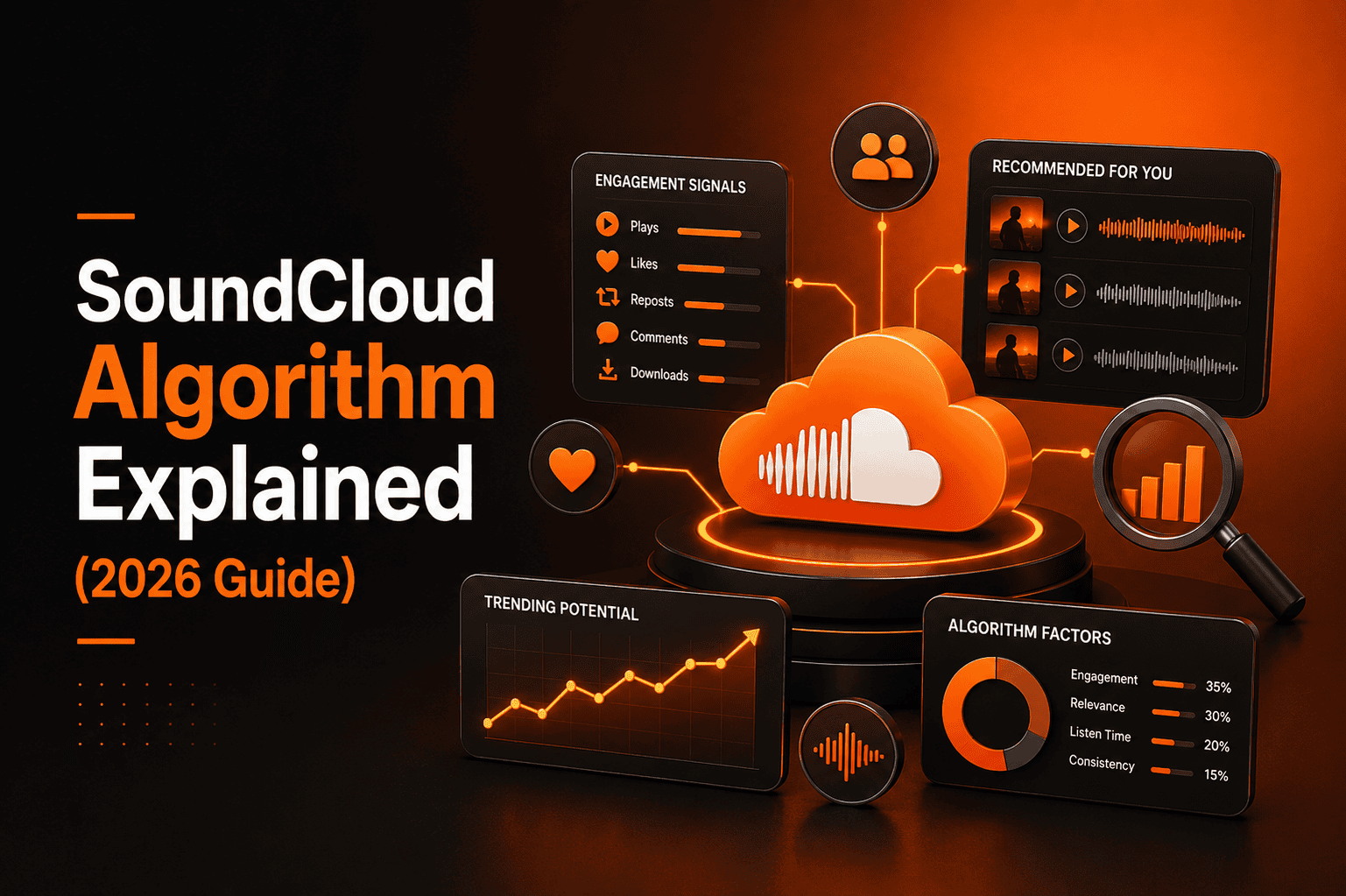
SoundCloud Algorithm Explained (2026 Guide)
The SoundCloud algorithm decides which tracks people see and hear on SoundCloud. It controls what appears in search results, Discover, and personalized recommendations. If you are an artist, producer, or music marketer, understanding this system is very important. It helps you grow your audience in a smarter way.
Many creators upload great music, but still get low plays. This often happens because they do not understand how SoundCloud ranks content. The system studies engagement, listening behavior, and consistency. It then increases the chances of exposure for tracks that perform well.
What Does the SoundCloud Algorithm Do?
The SoundCloud algorithm is a ranking and recommendation system. It decides which tracks get visibility across SoundCloud.
It analyzes user behavior and tracks performance. It looks at plays, likes, reposts, comments, follows, and listening time. It also checks how often listeners skip a track.
In simple words, the SoundCloud algorithm rewards music that keeps listeners engaged and active.
How It Works
The SoundCloud algorithm works in structured stages.
- Data collection: It tracks plays, likes, reposts, comments, follows, and listening duration.
- Performance scoring: It evaluates engagement rate, completion rate, and interaction speed.
After analyzing these signals, the system may increase exposure through recommendations and related sections. Strong engagement in the first 24–72 hours often improves the chances of further visibility.
Consistency also matters. Accounts that upload regularly tend to maintain stronger momentum compared to inactive profiles.
How SoundCloud Discovery Surfaces Work
The SoundCloud algorithm does not operate in just one place. It functions across multiple discovery surfaces inside SoundCloud.
Key discovery areas include:
- The Upload: Fresh tracks recommended based on listening habits.
- Related Tracks: Suggestions shown under a currently playing track.
- Artist Stations: Auto-generated playlists built around an artist or track.
- Weekly Recommendations: Personalized suggestions based on user history.
Each surface uses listening patterns, similarity signals, and engagement data. A track may perform differently across these sections depending on audience behavior.
Ranking Signals Explained
To understand the SoundCloud algorithm better, it helps to define key metrics.
Engagement Rate:
The percentage of listeners who like, repost, comment, or follow after playing a track. Upload timing can influence early engagement, which is why testing the best upload time on SoundCloud is helpful.
Completion Rate:
The percentage of listeners who play the track until the end.
Click-Through Rate (CTR):
The percentage of users who click your track after seeing it in search or recommendations.
Here is a simplified comparison
| Metric | What It Measures | Why It Matters |
| Plays | Total listens | Basic popularity indicator |
| Likes | Positive listener reaction | Strong engagement signal |
| Reposts | Sharing behavior | Expands organic reach |
| Comments | Active interaction | Boosts visibility signals |
| Completion Rate | Listening depth | Indicates content quality |
Tracks with higher completion rates often have better chances of appearing in recommendation feeds. Short and engaging intros can improve listener retention.
Most engagement impact happens within the first 72 hours after upload. That time window is often critical for performance signals.
AI and Predictive Technology in the SoundCloud Algorithm

SoundCloud uses machine learning systems to improve recommendations. These systems analyze listening behavior patterns across millions of interactions.
For example, if users who enjoy a specific genre tend to replay certain styles, the algorithm learns this pattern. It then suggests similar tracks to users with matching interests.
This predictive system also helps solve the “cold start” problem. A new track with few plays may be shown to a small test audience. If engagement signals are strong, exposure can gradually increase.
The algorithm does not guarantee viral results. It increases exposure step by step based on measurable performance.
How Analytics Connect to Algorithm Performance
SoundCloud provides analytics that show plays, listener retention, engagement activity, and traffic sources. These insights reflect how your track interacts with the algorithm.
| Metric | What It Indicates |
| Traffic Source | Where listeners discovered your track |
| Listener Retention | How long users stay engaged |
| Engagement Ratio | Interactions compared to total plays |
If retention is low, your intro may need improvement. If most traffic comes only from your profile, your track may not yet be reaching recommendation surfaces.
Analytics do not directly change ranking. However, they help you adjust your strategy to improve performance signals.
Common Problems Where Many Creators Struggle With
Many creators struggle because they misunderstand ranking signals.
Low completion rates are a common issue. If listeners skip early, the system may reduce exposure. Weak titles, missing tags, or unclear descriptions can also limit discoverability.
Irregular uploads may slow growth as well. Consistency helps maintain audience interest and engagement patterns.
Pros and Cons
The SoundCloud algorithm has strengths and limitations.
Pros:
- Rewards engaging and high-quality tracks
- Connects artists with relevant listeners
Cons:
- Early weak performance can slow distribution
- Highly competitive genres are harder to rank in
Understanding both sides helps you build a smarter release strategy.
Scenario Breakdown
Imagine two artists upload similar tracks on the same day. Artist A promotes their track and gains strong engagement within 48 hours. Artist B uploads without promotion and receives minimal interaction.
The SoundCloud algorithm detects higher completion rates and repost activity for Artist A. The system may then test that track with a wider audience in recommendation sections. Over time, Artist A gains more exposure and followers.
This example shows how early engagement can influence long-term growth potential.
Expert Tips to Work With the SoundCloud Algorithm
Focus on strong production quality. Keep your intro engaging to reduce early skips.
Optimize your title, genre tag, and description naturally. Promote your track during the first 48 hours to increase early engagement.
Maintain a consistent upload schedule. Even steady monthly releases can build long-term algorithm trust. Artists who understand the algorithm can promote their music on SoundCloud more effectively.
Final Thoughts
The SoundCloud algorithm is based on measurable engagement signals, not randomness. It analyzes listener behavior, track performance, and consistency across multiple discovery surfaces.
When you focus on completion rate, early engagement, optimized metadata, and steady uploads, you improve your chances of broader exposure. The system increases visibility step by step based on real performance.
Understanding how the SoundCloud algorithm works turns uncertainty into strategy. With the right approach, you can build sustainable and steady growth on SoundCloud.
Frequently Asked Questions
1. Is the SoundCloud algorithm safe?
Yes. It is an automated recommendation system built into SoundCloud. It analyzes listener behavior to improve content discovery.
2. Is it legal to optimize for the SoundCloud algorithm?
Yes. Improving titles, descriptions, and engagement strategy is allowed. Artificial manipulation or fake interactions can negatively affect account performance.
3. Does the SoundCloud algorithm work on mobile?
Yes. The same system works across the SoundCloud app and web version. Listener activity from both platforms influences ranking signals.
4. Why does my track fail to rank?
Common reasons include low completion rate, weak engagement, strong competition, or poor metadata optimization. Early performance also plays a major role.
5. How long does it take to see results?
Initial signals are strongest within 24–72 hours after upload. However, consistent releases improve long-term visibility.
6. What are alternatives to relying only on the algorithm?
You can support growth with social media promotion, collaborations, email outreach, and playlist networking. These methods complement SoundCloud’s organic system.